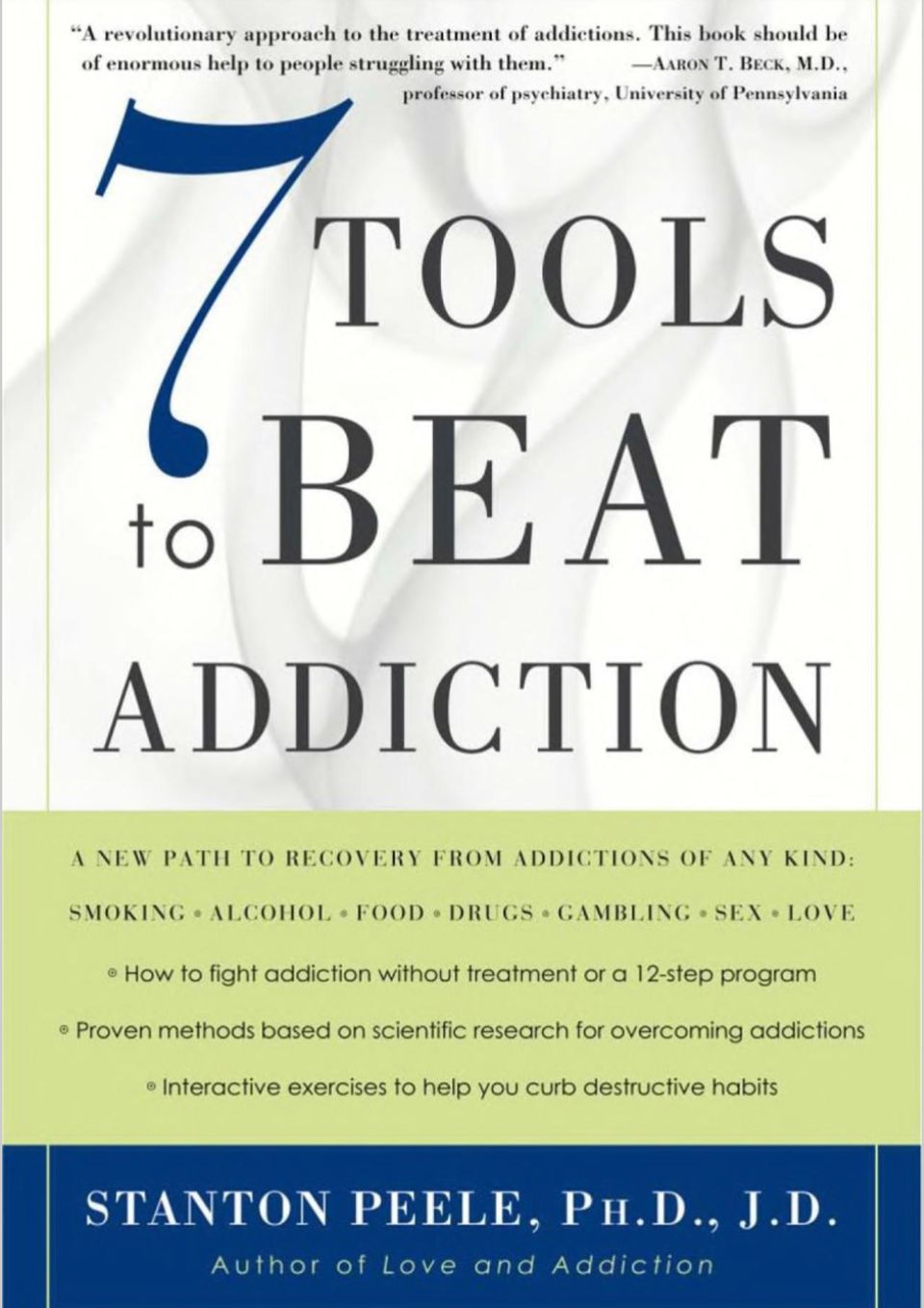
7 tools to beat addiction (Stanton Peele)-Book summary, exercises, and quotes.
Chapter One
Values
Values are one of the key factors to escape addiction, it helps to decide what is right and what is wrong. For example, if an individual has values, they won’t overspend as overspending would uphold important values such as paying bills or debt. To someone, if there are no values then that person is more likely to indulge in addiction. We learn values from people around us, our friends, and the people we look up to. The environment we surround ourselves with is very crucial, as we always surround ourselves with negativity more often than not we tend to get indulged in negative activities. From a very young age values should be installed into children by their parents. The way children are raised at a young age tells a lot about how they would grow up when they become an adult if they are raised poorly between addicts, they are more likely to become addicts as well. Research shows that addiction rates are higher in lower class people than in higher class people. Higher-class people are superior in resisting their addiction; they value their health, family, and well-being.
Whenever we feel alone, we should keep reminding ourselves that we are not alone, there is (God) who is always with us, and he will never let us down. Each individual is in control of themselves, no one is going to come and help us if we don't help ourselves. Parents should be kind and empathetic towards their children. Right from childhood, we must teach children productivity, self-respect, work ethic, and efficiency.
Exercise
- Think about one of our previous bad habits and then think about what kept us away from that, things that kept you away from it are our values.
- We need to change our behavior towards our bad habits.
Chapter Two
Motivation
The motivation of quitting would not result in immediate success, we should not be hard on ourselves, it will take time because the addiction is deeply rooted, we should have patience and be consistent. Psychologists James Prochaska and Carlo DIClemente’s stages of quitting are:
- Pre-contemplation- It is the stage when we haven’t thought of quitting.
- Contemplation- We begin to think that your life might be better if you change.
- Preparation- We make a decision and start planning to change
- Action- We take action
- Maintenance- We have had success and need to keep it in place
To quit a habit we need to look up to something that would inspire us to quit that bad habit, and it is a myth that trying something once will get us addicted, but often people tend to get addicted to intoxicants, and have a very hard time quitting, so according to the author the effective ways we can quit are given below:
- Establishing our goals and method of change.
- Working from an individual value framework
- Checking our progress over time.
Exercise
Questioning exercise
Reflective summarizing
Developing Discrepancies
Motivationally interview yourself
Brief intervention exercise
Chapter Three
Rewards
Drugs and other types of intoxicants give us short-term gratification, in the long run, it affects us mentally, physically, and spiritually. People do drugs when they feel down, but it doesn't help rather it makes the situation worse. To quit we need to find satisfaction doing something else that's healthy such as physical work, reading books, etc.
There are different kinds of addicts, some need to be convinced that they need to quit whereas others just quit seeing that the addiction has more cons than pros. The author suggests keeping the cost and benefits in mind as it would prevent severe relapses in the future. Many of us wait for the right moment to change, but the truth is the right moment won’t come until we make it the right moment The three beneficial R’s are :
- Recognize- Identify the problem
- Reframe- Behavioral change
- Replace- replace with an alternative
.Exercise
- We need to reconsider the reward of our addiction.
- We need to take notes about the pros and cons of the addiction.
- We need to find alternate ways to gain positive feelings and make sure they are healthy.
Chapter Four
Resources
To recover from an addiction one must identify their strengths and the weaknesses they need to improve on. Down below are some essential skills that could help (according to the book):
- Communication
- Problem-solving
- Independence/ being alone
- Managing negative emotion
- Resisting urges
- Relapse prevention
We must pay extra attention to what takes us back to our bad habits and try to control the triggers or avoid them as much as possible. Sharing and communicating with our loved ones that are non-judgemental would help a lot. When a problem arises, we must stay calm and composed, it will let us control the situation avoiding any further problems. When dealing with loneliness or negative emotions, make a healthy choice (walking or reading) rather than an unhealthy one (going back to the addiction). We can also use tricks when we feel the urge such as counting to ten, do pushups, and many more, we could do anything (healthy) to keep ourselves away from doing the bad.
Exercise
- Communicating clearly
- Learning to be happy alone
- Replacing old bad habits with new healthy ones
Chapter Five
Support
Social learning could be used to refrain from addiction. We should be kind and nice when dealing with addicts. We need to find ways to reverse forces that create addiction. The ways include:
- Finding people and groups to support our recovery
- Working with significant others in our life so that they become a supportive force to reduce the pressures that lead us to succumb to our addiction and thus enhance our chances for recovery.
- Playing the same positive role for others as a friend, spouse, or participant in a group.
As we focus on our perspective we will find ourselves away from addictions. We don’t need professional help (as long as things are not out of control), we just need to surround ourselves with positive-minded people, around a positive environment. We must search for motivation from our surroundings, and connect with our family members, our mentors, and our friends. But be careful as friends and family and loved ones can help, but they can also demotivate, we should not let that happen. We need to surround ourselves with positive people by omitting every negative person in life and making a change for ourselves.
Exercise
- Emulate successful friends
- Inspect relationships
- Join or create a support group
Chapter Six
A mature identity
Maturing out makes people dissatisfied with addiction. Addiction pushes responsibilities away, teenagers tend to get into addictions like drugs, drinking to fit in with a group. To be responsible for ourselves, our family members, and our loved ones we need to develop a mature perspective.
Essentials for developing a mature perspective:
- Self-efficacy- Developing expectations, tools, and experience that we can achieve anything.
- Self-acceptance- Like everyone we have good and bad habits, we have to own them and accept them.
- Tolerance- For others and ourselves too.
- Responsibility- For our actions
- Obligation= On our family, and others. (people are counting on us)
- Faith in continued existence- Life goes on no matter what, and after a certain time things will fall in place, have patience.
We shouldn’t let our past define us, we have to remember that we have messed up in our past, but now it’s time to look forward and take responsibility for our actions, visualize our success and never lose hope in ourselves.
Exercise
- when we’re trying to quit our addiction, from time to time we should ask our loved ones how we're doing and take their opinions.
- Make sure to admire the right people, people who would motivate us to be better human beings.
Chapter Seven
Higher goals
Instead of focusing on giving up our addiction, we need to focus on our goals and ambitions which would help us to quit our addiction. Addiction is just not harmful to us individuals, it is harmful and irritating for others as well. It creates noisy intoxication, irresponsibility, littering, assault and violence, and many more.
Obesity is another thing that is common nowadays, and that is due to excessive eating and an unhealthy lifestyle. We must involve ourselves in social activities, and parents should teach their kids to eat healthily and make them do physical activities. Involve with the community to stay busy, go after what we are passionate about, we need to find our hobbies, and keep doing what we love. We must rise above our addiction, only then will we realize that we can make a difference.
Quotes
“Thus instead of focusing on what you need to quit or escape from, it is critical to focus on what you want to achieve”.
When your perspective is focused on other people and such larger goals, you are not inclined to be tripped up by destructive, self-focused addictions.
Over time you will realize that your life does make a difference.
People turn to addictions when they find themselves in environments where it is difficult
Exercise
- we need to see how our addiction affect us and our social well being
- Calculate our contributions- To our family and the community.
- Make a list of groups we belong to and a list of groups we need to join.